Presented By:
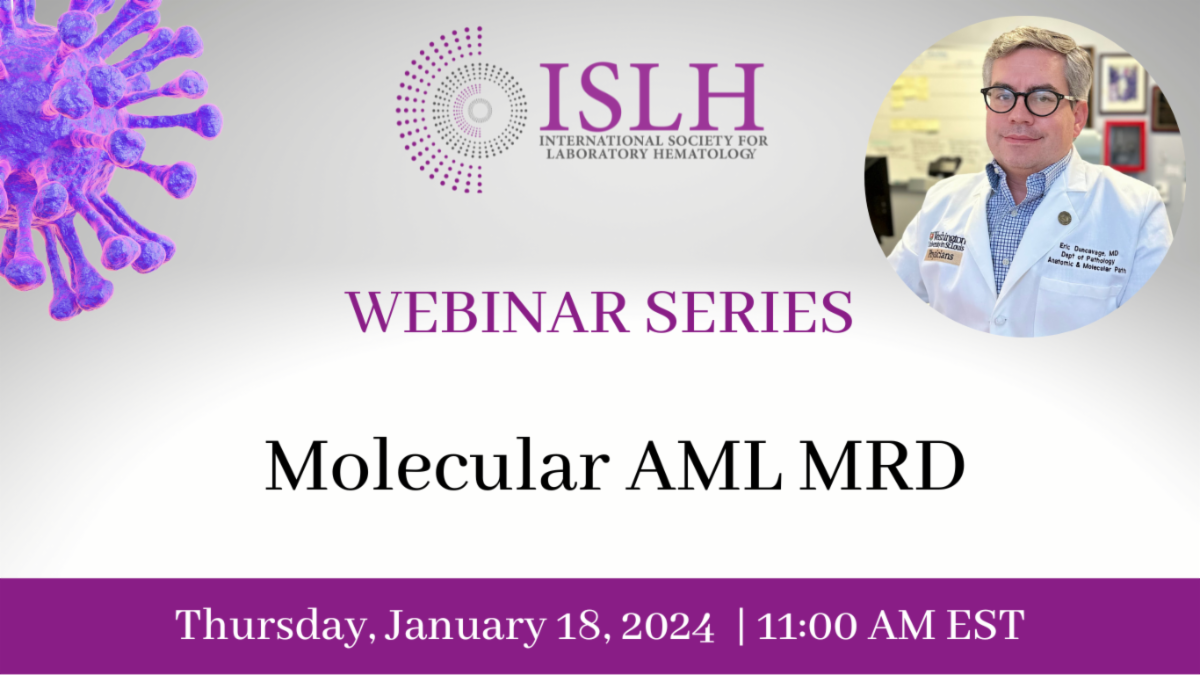
Eric Duncavage, MD
Washington University School of Medicine
Professor, Department of Pathology and Immunology
Director, Section of Molecular Oncology
Monitoring AML and MDS patients for disease recurrence and progression is a critical to risk-adapted treatment protocols. This talk will focus on how molecular methods including NGS can be used to monitor AML and MDS patients for disease recurrence and treatment response. Different laboratory approaches to molecular minimal residual disease (MRD) monitoring including qPCR, error corrected sequencing, and gene targeting strategies will be discussed and compared to non-molecular MRD monitoring. Interpretation of MRD data including examples from our clinical practice at Washington University will be presented.
Learning Objectives:
- Participants will be able to identify the clinical utility of MRD testing in AML and MDS patients and how MRD data is used by oncologists to make treatment decisions.
- Participants will be able to identify the core technologies used in molecular MRD testing including qPCR and error-corrected sequencing.
- Participants will be able to identify Issues key issues in interpreting clinical molecular MRD data including persistent clonal hematopoiesis and clonal evolution.
All webinars will begin promptly at 11:00 AM Eastern Time US and are approximately 50 minutes long. There is no charge to participate in the live webinar.
All archived webinars are available for free to ISLH Members. You can access the webinars by logging into your ISLH Member account or visiting the ISLH Education webpage.